
This summer, Alma College students participating in undergraduate research are gaining more than hands-on experience in laboratories and the field. Through a new partnership between the CORE Summer Research Program and the Advancement Office, they are also hearing directly from alumni whose own research experiences helped launch remarkable careers.
Throughout the summer, alumni are joining weekly CORE lunches to share their professional journeys, offer career advice and demonstrate how the skills developed through undergraduate research can open doors to a wide range of opportunities.
The speaker series is part of Alma College’s Cooperative Research Experience (CORE), an intensive summer research program that brings students and faculty together to pursue original STEM research projects. Participants spend approximately 10 weeks working full time alongside faculty mentors, developing skills that often lead to conference presentations, publications and advanced study opportunities.
These students are doing real work,
said Dr. James Mazzuca, professor of chemistry and one of the program’s organizers. Being able to spend the whole day in the lab or in the field is a very different experience than what can happen during a regular semester. It gives students the opportunity to build momentum, develop strong relationships with faculty and make significant progress on research projects.
This year’s alumni speakers offer students a glimpse of the many directions a STEM education can lead.
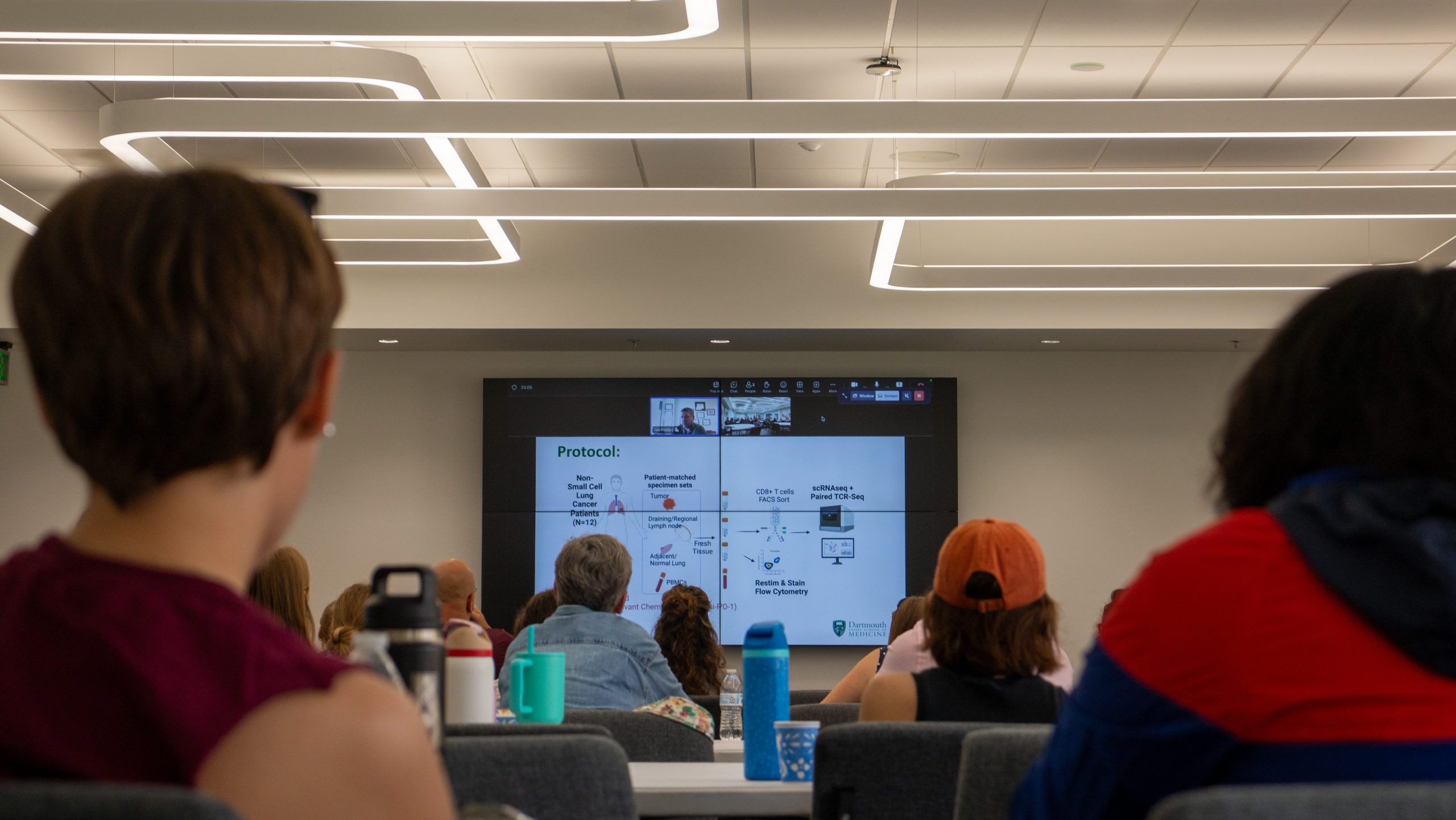
Among them is Dr. Joseph Phillips ’03, associate professor and staff physician at Dartmouth-Hitchcock Clinics, cardiothoracic surgeon and member of Alma College’s Board of Trustees. During his presentation, Phillips reflected on the undergraduate research he conducted with longtime biology professor Dr. Larry Whittle and the lasting impact that experience had on his career.
Working in Whittle’s laboratory helped Phillips develop foundational research skills and introduced him to the process of asking scientific questions and pursuing answers through careful investigation. Just as important, he said, were the close relationships he formed with faculty mentors.
We started off as professor and student and then really became friends over the course of several years,
Phillips said. I don’t think you get that at a lot of bigger schools.
Today, Phillips balances patient care, research and teaching at an academic medical center. He encouraged students to take full advantage of research opportunities, noting that experiences like CORE help distinguish applicants for graduate programs, medical schools and STEM careers.
For Dr. Jamie Blow ’84, the path from Alma College to a distinguished scientific career was anything but predictable.
A retired U.S. Army colonel, public health scientist and entomologist, Blow spent decades protecting soldiers from disease, leading research initiatives and working around the world. She later became the first woman to serve as director of Defense Pest Management and chair of the Armed Forces Pest Management Board.
Speaking with students, Blow emphasized that success is not defined solely by grades or a carefully planned career path.
You have to make yourself valuable to the group that you’re with,
she said. You have to be willing to do the hard work and step outside your comfort zone.
Blow credits Alma College with helping her develop the critical thinking skills that guided her throughout a career that took her from Germany and Bosnia to Georgia, Kenya and Afghanistan.
Alma taught me to think,
she said. It’s not just that I learned information. Alma challenged me to analyze problems, ask questions and apply what I learned in different situations.
Her commitment to helping the next generation is also reflected in an endowment she established to support women pursuing STEM fields at Alma College.
For Mazzuca, bringing alumni back into the program helps students see the broader possibilities available to them.
A bachelor’s degree might say biology or chemistry, but there are lots of different things you can do with those degrees,
he said. It really helps students to see actual people who were in their shoes and understand how they leveraged these experiences into meaningful careers.
The alumni speaker series represents a growing collaboration between faculty leaders and Alma College’s Advancement team, which helped connect current researchers with graduates eager to give back. Drs. Scott ’79 and Martha Larsen ’81, both prominent researchers in the pharmaceutical industry, will speak with students in July.
Mazzuca hopes the effort will continue to grow alongside the CORE program itself.
We want students to see the outcomes that come from this kind of work,
he said. Bringing alumni back, building those connections and sharing these stories is part of how we continue to invest in the future of undergraduate research at Alma College.
The CORE Summer Research Program will conclude July 31 with a public symposium featuring student research presentations, giving participants an opportunity to showcase the work they have completed throughout the summer and celebrate the discoveries they have made along the way.