When Alma College students took the stage for the 2026 Masterworks concert, they weren’t simply performing a piece of music. They were helping bring a new work into the world.
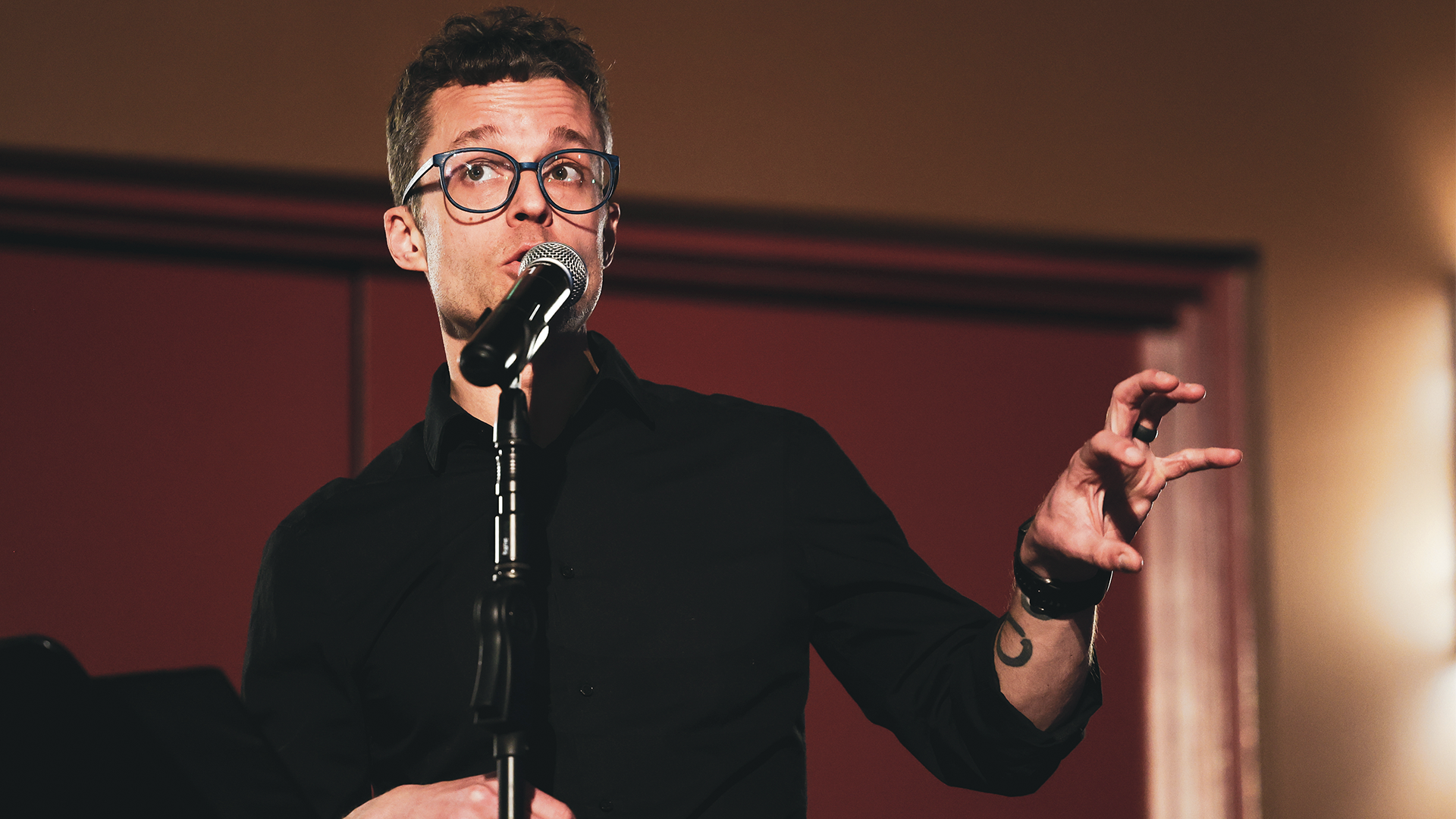
This past spring, the Choirs, College Chorale, and Alma Chamber Orchestra presented one of the first performances of Social Justice Magnificat, a large-scale work for choir and orchestra composed by ’08 Alma College alum and Assistant Professor of Music and Department Chair of Music and Dance, Dr. Justin Rito.
For Rito, the project represented the culmination of years of reflection on one of Christianity’s most frequently set texts: the Magnificat, Mary’s song of praise from the Gospel of Luke.
It’s one of those texts in the Bible that really speaks toward a message of social justice and healing, and welcoming a stranger, and being sort of a steward toward other people, not just toward yourself,Rito said.
The Magnificat has inspired hundreds of musical settings over the centuries, including well-known versions by composers such as Johann Sebastian Bach and Antonio Vivaldi. For the Masterworks concert, Alma performers explored three different interpretations of the text, including works by Vivaldi, contemporary composer Taylor Scott Davis, and Rito.
But while many settings emphasize the text’s beauty and devotion, Rito was drawn to what he sees as its more
challenging message.
I think it’s a lot darker than we allow it to be,he said. In Mary’s words, Rito hears a call to confront inequality and care for those on society’s margins. One of the central sections of Social Justice Magnificat reflects that interpretation by interrupting the Latin text with a spoken English passage delivered by a single voice.
The speaker declares,
He has scattered the proud in their conceit. He has cast down the mighty from their thrones, and has lifted up the lowly. He has filled the hungry with good things and the rich he has sent away empty.
By stripping away the orchestra and choir at that moment, Rito hoped audiences would hear the text’s message with fresh clarity.
The six-part composition takes the listener on a complex emotional journey that begins with haunting tones, transitions to lighter, twinkly sounds that evoke images of a new dawn, then increases heavier notes of urgency and drama until it eventually resolves to the peaceful, hopeful impressions of its conclusion.
Alma’s Masterworks performance marked only the second time the composition had been performed publicly.
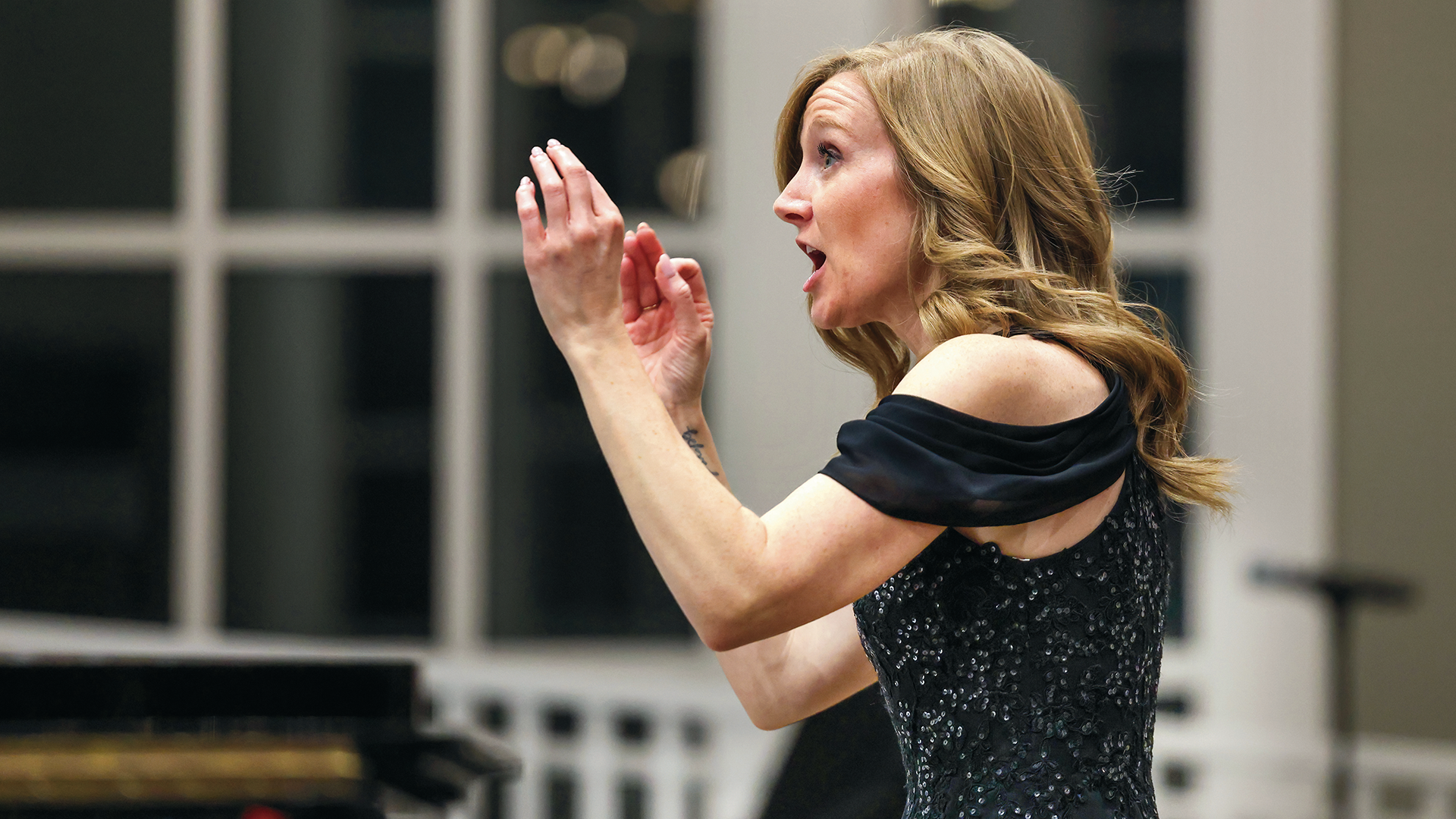
For Dr. Nicole Mattfeld, director of choral activities at Alma College, the opportunity to participate emerged through an unusual coincidence. She had already planned to conduct a Masterworks program centered on settings of the Magnificat when she learned that Rito was composing one of his own.
I obviously wanted to support my colleague,Mattfeld said.
I also wanted to give students a rare opportunity to work directly with a living composer. They were able to ask questions, get feedback, and experience the creative process in a way that’s simply not possible when you’re performing a work by someone like Vivaldi.
Throughout the rehearsal process, Rito—whose music has been performed in concerts throughout the world—attended practices and collaborated with conductors and performers.
Many of my students said that it was their favorite of the three that they performed,Mattfeld said.
It was also the most challenging from a rhythmic and harmonic perspective. There are moments in the piece that still take my breath away.
Following the concert, Alma performers returned to the stage for an intensive recording session involving nearly 100 performers, including students, faculty members, community musicians, and professional instrumentalists. Unlike many modern recordings, the ensemble recorded complete movements rather than assembling the work from short edited segments. Their ambitious efforts were successful.
For Rito, hearing the finished recording was both professionally and personally rewarding.
The quality of the recording is so good,he said.
I just feel very grateful. It was a lot of hours from a lot of students and faculty and professionals.
Some special moments came not during the recording itself, but in conversations with students who participated in the project.
They would say, ‘This was one of the most meaningful things that I’ve been a part of,’Rito said.
I can’t imagine a better outcome than being an instructor who’s trying to pay it forward and be part of students’ lives in a way that is meaningful to them.
The recording will help Rito with conductors and ensembles across the country as he explores future performances and arrangements of the piece. For now, however, it also serves as a lasting document of a uniquely Alma collaboration — one that brought together an alum, faculty, students, and community
musicians to create something new.
What a rare opportunity,Rito said.
I’m a lucky guy.To watch a video of the performance, visit