


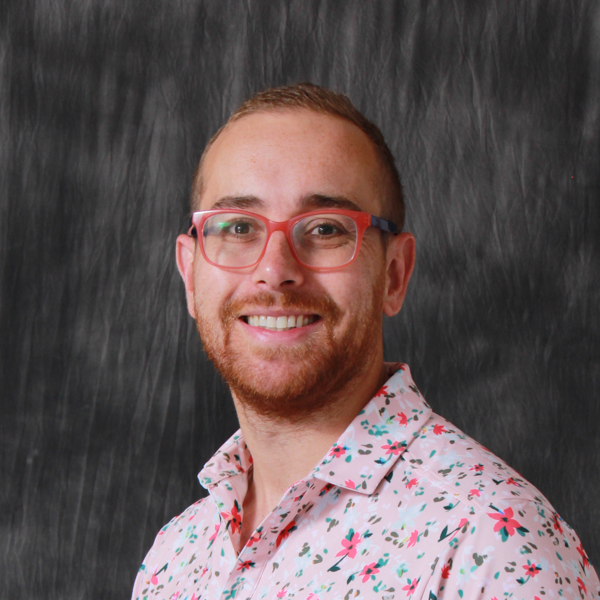
Douglas R. Campbell
ALMA — Alma College philosophy professor Douglas R. Campbell has published “An Introduction to the Ethics of Social Media,” possibly the first textbook to offer a comprehensive, introductory exploration of one of the most rapidly evolving ethical issues of the digital age. The book was released in September by Hackett Publishing Company.
Campbell, whose academic background is in ancient Greek philosophy, developed the material for the book over several years of teaching what he believes to be the first English-language college course on the ethics of social media. He first offered the class in 2020 while on faculty at the University of Toronto and later brought it to Alma College, where it consistently draws extensive waitlists.
“I realized very quickly that the national conversations happening around misinformation, polarization, privacy and cancel culture were really conversations about ethics,” Campbell said. “Students had enormous interest in these topics, but there was no unified, accessible way to teach them. After years of discussions in my classes, I distilled all of that material into a textbook designed from the ground up for students, instructors and the general public.”
“The Ethics of Social Media” introduces eight major themes in the field, including privacy, platform design, online shaming, political polarization and the ways social media companies compete for and manipulate user attention. Each chapter includes clear explanations of key terms, summaries of foundational readings, topical case studies — including recent cultural examples — and guided discussion questions.
Campbell emphasized that the book’s classroom-tested approach is central to its usefulness. “There’s no way I could have written this without my students,” he said. “Every explanation, every case study, every prompt has been shaped by years of trial and error in real classrooms. Their curiosity and pushback helped me find the clearest, most engaging ways to teach these issues.”
Interest in the book has been strong. Since its release, more than 160 instructors have requested physical desk copies for potential course adoption, with many more requesting digital versions.
In addition to analyzing social media platforms, Campbell also raises questions about the ethics of using them at all. He argues that the platforms’ design makes meaningful, healthy use extremely difficult. “There are better and worse ways to engage with social media,” he said, “but study after study shows that the more time we spend on these platforms, the worse off we are. From a moral and psychological standpoint, we would probably all be better served by quitting.”
Campbell notes that stepping away from social media has broader social implications. “When someone quits, they make it easier for others to do the same,” he said. “It sends a message that it’s possible — that opting out can be normal. That ripple effect is part of what makes our individual choices ethically important.”
Campbell expects the book to influence both teaching and scholarship as the field rapidly develops. He is already in early conversations about future editions as social media technologies — and the ethical questions surrounding them — continue to evolve.
“My hope is that this book helps people understand why these platforms shape our choices the way they do, and what more ethical use might look like,” he said.