
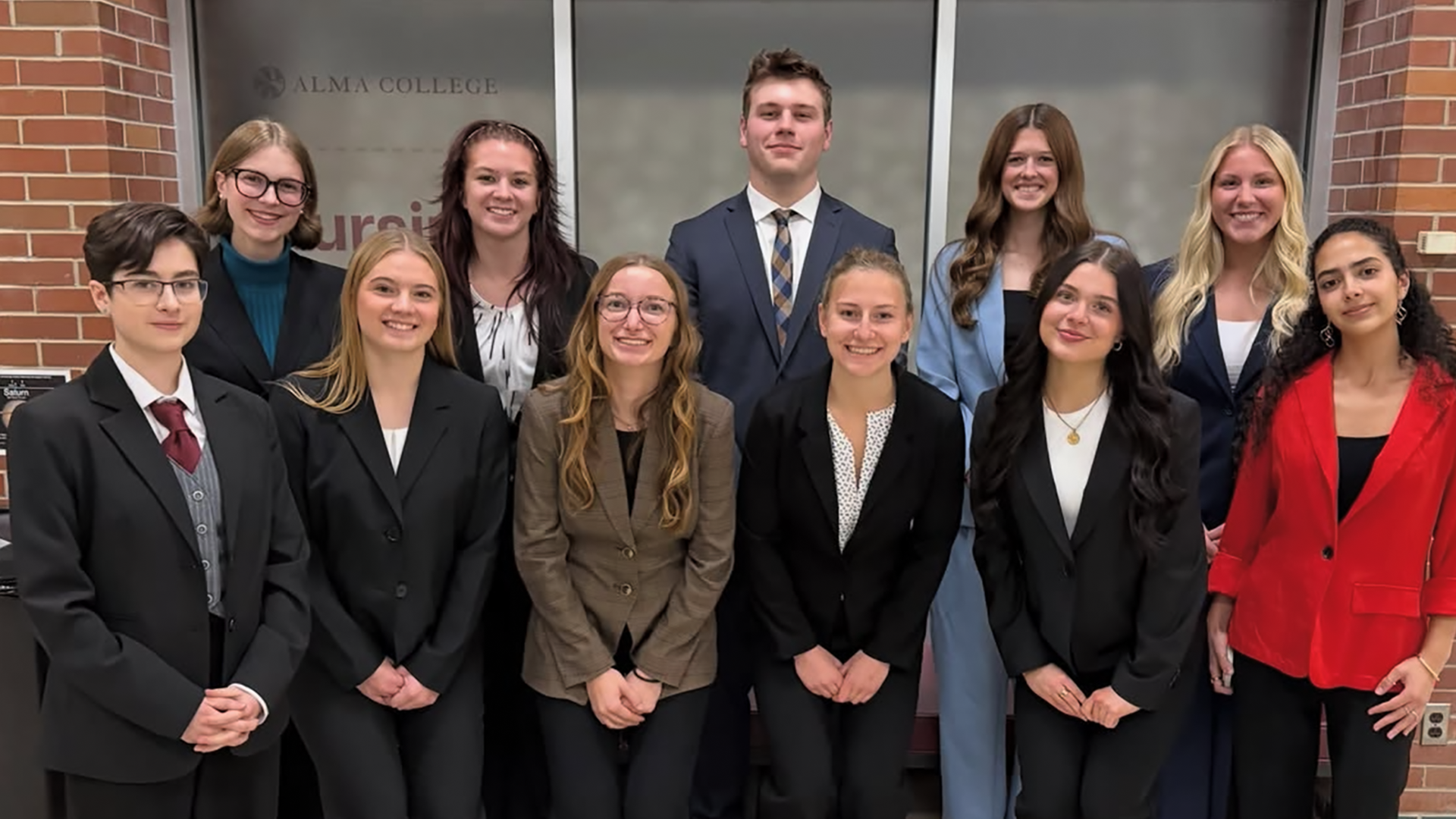
Madesyn Wheaton
Class of 2027
Home country: United States — Chitwan, Nepal: Elephant Care Nepal
When I committed to Alma, I did not know about many of the opportunities the college offered. Travel spring terms, research, Model UN, and the Posey Global program were all things I learned about later. I spent my first years focused on work and athletics. In my junior year, I stepped far outside my comfort zone and joined Model UN, where I discovered a deep passion for environmental issues. That passion led me to the Posey Global program, and ultimately to Nepal. I was excited about the trip, but above all, I was terrified. I had never traveled outside the country, and the longest flight I had taken was two hours. Staring at the flight screen in New York, the thought of a 16-hour flight alone was paralyzing, and I almost talked myself out of boarding. The moment I landed in Nepal, those fears subsided.
I spent my first day in Kathmandu connecting with other volunteers from 7 countries on 4 continents. Some were headed to teach English or work in women’s education, but we were all united by a desire to contribute to the world in a meaningful way. For me, that desire manifested in working at an elephant sanctuary in Chitwan, where I hoped to learn about the effects of ecotourism, including elephant riding, and the economic and cultural impact of efforts to end it.
Elephant Care Nepal was founded by siblings Dikshya and Dikshyanta Rejal, who grew up surrounded by elephant riding. Their father still owns many elephants for tourist rides. Six years ago, at only 21, Dikshya pushed to buy one of them from him. I came to learn this was far more than a push for animal rights. It went against cultural norms and strained their relationships with both their family and their society. Dikshyanta, whom I came to know as Babu, made the experience so impactful. He offered endless advice, fun conversation, and a sense of belonging I never expected to find. We had tea together every day, he taught me games, and he took me on side quests around the village. I came to understand Nepali culture through him in a way no ordinary visit could offer, and he never made me feel less than part of his family.
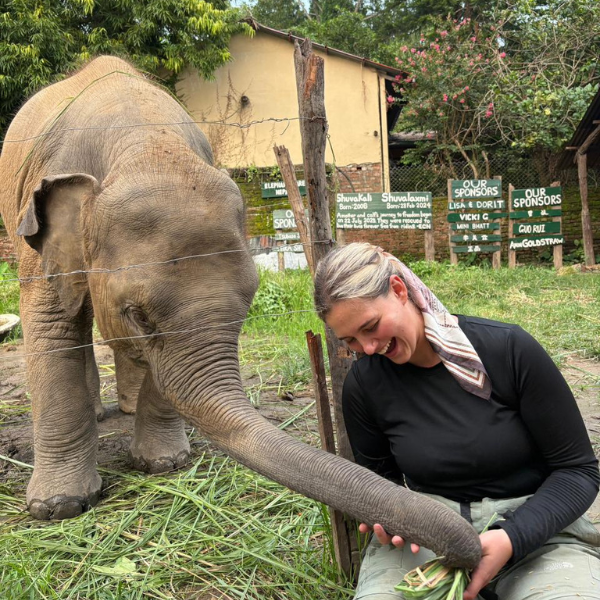
Our days had a steady rhythm. In the morning, we cleaned the enclosure while the elephants grazed in the forest, then tackled small construction projects like fixing a fallen fence post or building new signs for the camp. Because of the extreme heat, I went home during the hottest part of the day and returned in the afternoon. Evenings were for making kuchi, cooking rice balls for the elephants, and cutting corn stalks in nearby fields. When the mother elephant broke her tusk, I helped one of the founders, Babu, and the other caretakers clean it, apply medicine, and pack it with gauze. Being face to face with such a large, intelligent animal was unforgettable.
Now I could not describe the impact of this experience without talking about the elephants, Shuvakali and her 2-year-old daughter, Shuvalaxmi. Kali is 19 and spent 17 years of her life in the riding industry before Dikshya and Babu bought her two years ago. As the sign at the camp says, she will now learn and love a life free of riding. The contrast between the two was astonishing. Kali was fearful of humans, especially around new visitors, while Laxmi had never known anything but free roaming, play, and love. Like any toddler, she was full of energy and mischief, and even when she broke out of her pen or stole all the food, she was only ever joyful. Earning enough of Kali’s trust to touch her, and even place my hands in her mouth, is something that will never leave me.
Near the end of my time there, I learned that Kali’s riding saddle, which weighs upwards of 230 kilograms, had been turned into a table. I never saw it, because Laxmi had already broken it to pieces by climbing on it. I found that poetic, a baby breaking the chains that had held her mother down for so long. Through her constant affection toward everyone she met, she also showed her mother that the world is not always full of those who wish to hurt you.
Every piece of the experience felt life changing. From day-to-day interactions with people visiting the camp, to late-night games or World Cup watch parties with my host family. I truly felt like I connected with people in a way I never anticipated. I hope to continue to support ECN in their mission to promote ethical tourism and provide a safe place for animals to live and thrive. I was aware of my limited world view, but living and learning in this amazing place not only proved that to me but ignited a desire in me to pursue a life of service for the world. I am forever grateful to ECN, and most importantly to the Posey Global Program for what it has done for my life.