
Shai Curtiss
Class of 2029
Home Country: United States — Gonda, India: Yashmay World School
My experience in India was one of the most challenging, rewarding, and perspective-shifting experiences of my college education so far. As someone who had never traveled internationally, spending over five weeks in a foreign country so different from my own required me to step far outside my comfort zone. I arrived with the intention of teaching students about the United Nations, diplomatic communication, and with the intent of helping them gain a global perspective on current events in in their world that they can change. I left with a much broader understanding of those subjects, as well as a greater appreciation for the people, experiences, and opportunities that shape our world.
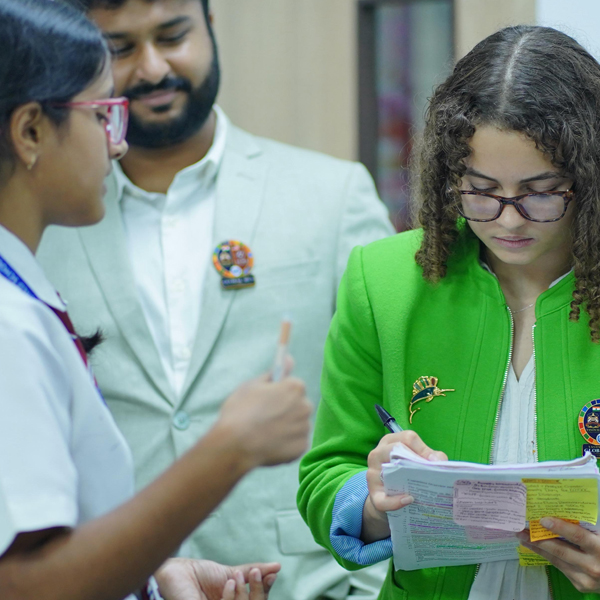
A significant part of my experience involved teaching students in grades six through eight about Model United Nations. My responsibility was to help students understand how to research international issues, prepare for a conference, and confidently present their ideas. I guided these students through the topics of the Commission on the Status of Women (CSW), the United Nations Environment Assembly (UNEA), and the World Health Organization (WHO), and during our conference I chaired and guided the CSW committee towards resolutions.
One of the most rewarding aspects of teaching was developing relationships with my students. I came to know them individually, and we established a class environment built on mutual respect, encouragement, and a little fun. They understood that if we accomplished what we needed to accomplish, there was always room to enjoy ourselves. More importantly, they felt comfortable approaching me when they needed help. Watching students develop confidence in their ability to research, speak publicly, and participate in conversations about international issues was incredibly rewarding. It reminded me that education is not simply about transferring information; it is also about helping others recognize their own capabilities.
As a Communication major, I found myself experiencing intercultural communication in ways that a classroom could never. I had to become an incredibly intentional listener. Navigating unfamiliar accents, varying levels of English proficiency, and different communication patterns was initially difficult. I learned to pay closer attention to nonverbal communication, including gestures and expressions that carried meaning I was not used to interpreting. Even something as simple as a head tilt required me to reconsider what I thought I understood. I also had to adapt my teaching methods for different ages, learning abilities, and levels of understanding. These experiences reinforced that effective communication is not just delivering a message, it requires listening, observing, adapting, and understanding the person receiving it.
Outside the classroom, one of the things that impacted me most was the hospitality of the Indian people. The cultural principle of treating a guest as God, was something I was shocked by. I have rarely encountered such an extraordinary willingness to welcome others. Being treated with that level of kindness and hospitality touched me deeply and challenged my understanding of making someone feel welcomed and valued.
However, my experience did not come without challenges. Homesickness was very challenging initially, and there was a period when the language barrier was very overwhelming. I also experienced food poisoning during the trip. My biggest challenge though, was witnessing drastic economic inequalities. Traveling through places such as Gonda, Ayodhya, and Delhi exposed me to living conditions vastly different from those I had known. Seeing individuals without reliable access to necessities that I have always taken for granted was heartbreaking. I found myself emotionally sick many days for things that I had taken for granted. I would think about how often I would complain about insignificant inconveniences while others navigate circumstances I have never had to consider. Something as ordinary as turning on a faucet and drinking the water, sleeping in a comfortable bed, or having a clean place to live took on a different meaning. It instilled a deep appreciation for the things I have, and it constantly has me reconsider my woes before I say anything.
India challenged me to become more observant, more intentional, and more aware of the world beyond my own experiences. Ultimately, this experience brought together many of the things I value about my education at Alma College: communication, international relations, education, and human connection. It allowed me to move beyond studying international issues and facilitate conversations about them. It challenged me to communicate across cultural differences, teach new concepts, and build relationships in an environment where I was often the one learning. I traveled to India hoping to contribute something meaningful to the students, but I also recognize that I returned with a greater appreciation for education, a deeper awareness of global inequality, and a renewed understanding of the importance of listening before assuming we understand. Most importantly, I returned knowing that some of the most valuable learning happens when we are willing to step outside what is familiar.