
ALMA — What began as a shared dream among four Alma College MFA graduates has evolved into a thriving literary project — one now shaped not only by online collaboration, but by a week spent immersed in one of the Midwest’s most celebrated artistic communities.
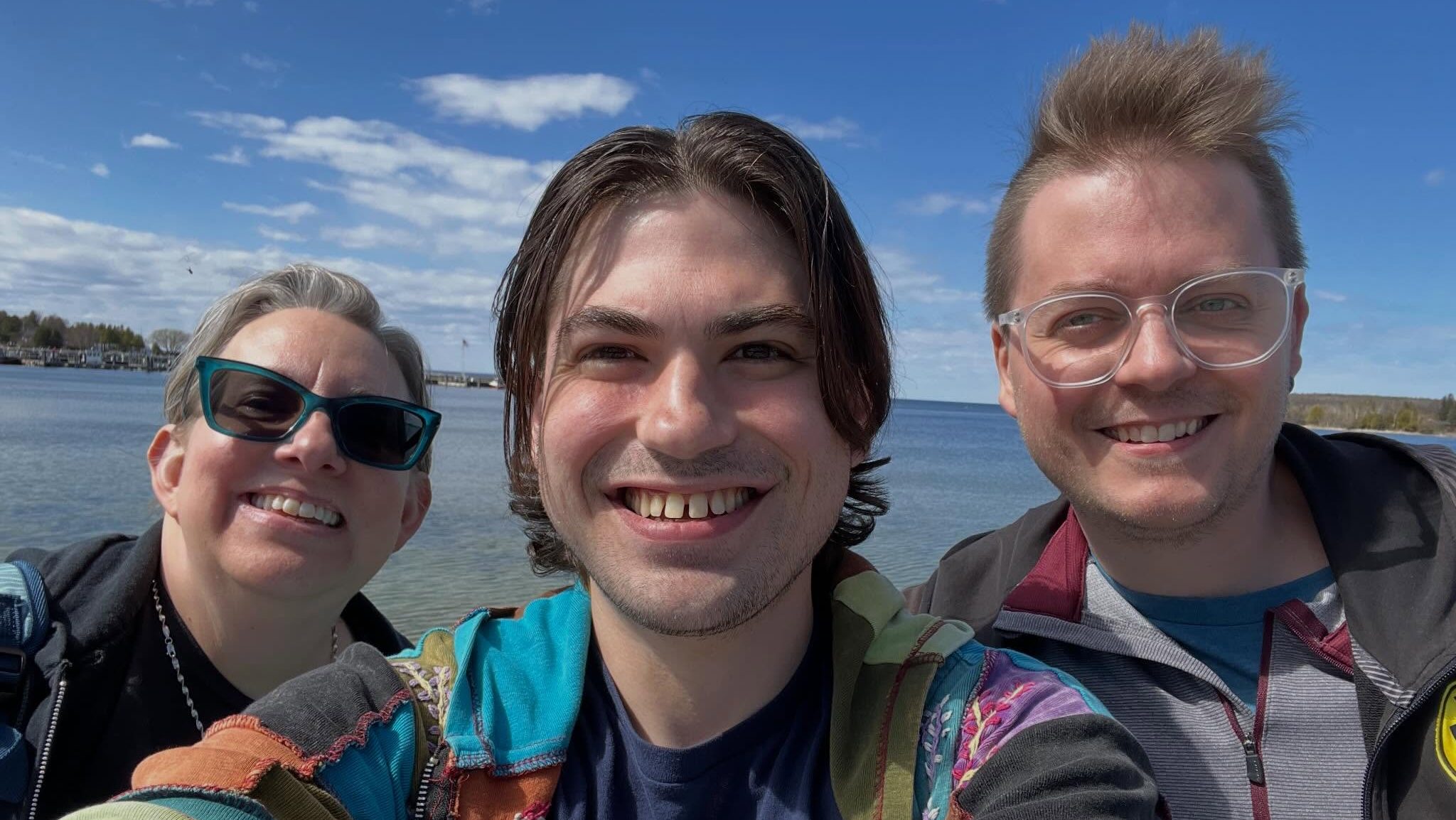
Earlier this year, Joey Lamson Meyer, Joshua Zeitler and Mary Bishop traveled to Door County, Wisc., after being selected for a residency through Write On, Door County, a nonprofit writing center nestled among forests, trails and Lake Michigan shoreline. There, the editors behind The Long and the Short of It
literary magazine spent a week writing, planning future issues of the journal, recording podcast material and teaching a public workshop centered on the idea of place in writing. Fellow editor Cash Whitney participated remotely throughout the residency via Zoom, contributing to conversations and creative work from home.
In Door County, we lived for a week in a gorgeous home right across the street from the Write On, Door County writing center — the loveliest place I’ve ever seen to sit and write,
Bishop said. It was the perfect mix of group productivity, individual inspiration and relaxation with friends.
The residency marked a major milestone for the group, whose literary magazine officially launched its first call for submissions less than a year ago. Created by the four graduates of Alma College’s low-residency Master of Fine Arts in Creative Writing program, The Long and the Short of It
was built around a simple but ambitious idea: creating space for work that exists at the extremes.
The journal publishes both very short and very long pieces across fiction, poetry, creative nonfiction, hybrid work and visual art — forms the editors say are often overlooked in traditional publishing spaces.
Flash forms are becoming increasingly popular,
Zeitler said in an earlier interview. But there still aren’t many places to publish them. And at the same time, a lot of longer works get passed over for being too lengthy. We wanted to create a space where both could thrive.
At Door County, the group used mornings to collaborate on the future of the journal and its growing podcast before breaking off for solo writing sessions in the afternoons. Evenings often revolved around shared meals, bonfires, theater outings and conversations about craft.
For Zeitler, one of the residency’s most memorable moments came while writing in the former workspace of celebrated Door County author Norbert Blei.
The memory of Norbert Blei’s writing coop is something I’ll carry with me the rest of my life,
Zeitler said. There was something magical about the community of the three of us sharing this space, having our mornings to share ideas and dreams over coffee, then working separately throughout the day.
The experience also shaped the public workshop the group hosted during their residency. Titled Vocation of Location,
the multi-genre class invited participants to explore how setting and geography influence storytelling.
Meyer taught fiction, Bishop focused on creative nonfiction and Zeitler led the poetry portion of the workshop. Each section combined discussion with generative writing prompts, allowing attendees to write and share work throughout the session.
I hope that the students walked away feeling inspired about their own potential and unique perspectives of place,
Meyer said. But I think it may have been the three of us who walked away with something, too.
The workshop drew mostly local writers from Door County, along with participants from elsewhere in Wisconsin. Among those attending were Door County’s poet laureates, who later invited the group to a local art and writing event in Sturgeon Bay.
The residency also created an opportunity for the journal to directly engage with the Door County writing community. Workshop participants and affiliated writers were invited to submit work inspired by the theme Vocation of Location
for a special issue of The Long and the Short of It,
scheduled for publication later this summer.
We’re hoping to select three or four pieces to publish as a special issue,
Zeitler said. Submissions don’t have to directly respond to the prompts, but they need to have a strong sense of place.
That emphasis on accessibility and creative exploration has remained central to the journal since its founding. There is no fee to submit and no paywall for readers. Themes are intentionally broad and imaginative, designed to encourage wildly different interpretations depending on genre and perspective.
We want prompts that spark something different in every writer,
Bishop said previously. A romance author might interpret a theme one way, while someone writing horror might take it somewhere completely unexpected.
The publication has continued to expand beyond the journal itself. Earlier this year, the editors launched The Long and the Short of It Podcast,
a bi-monthly interview series featuring conversations with contemporary writers. Early guests have included Alma College MFA faculty member Matthew Gavin Frank and Michigan author Kelsey Ronan.
Meanwhile, the journal continues releasing themed editions every other month. The upcoming issue, Hoopla,
is scheduled for August, with additional themed calls for submissions planned throughout the year.
We may be dreamers,
Meyer said, but look how far we’ve come in less than a year. I think we’re building something special.